Reflective WritingA reflective entry can hold both the facts of an experience and your interpretation of it. Learn a simple way to tell them apart without dismissing your feelings or turning your journal into an investigation.
Read article · 4 min↗

Reflective WritingA learning journal can help you notice what you tried, where you got stuck, and what to do next. Here is a simple way to write useful entries while keeping the practice manageable.
Read article · 4 min↗

Reflective WritingA prompt like “What matters to me?” can be hard to answer because there are so many places to start. Learn how to narrow a broad question into a specific moment, write a useful first draft, and stop without feeling you have to reach a grand conclusion.
Read article · 3 min↗

Reflective WritingA weekly reflection can help you see how your routines actually work, rather than how you intended them to work. Use a few simple prompts to notice patterns, make small adjustments and recognize progress without turning your journal into another task to perfect.
Read article · 4 min↗
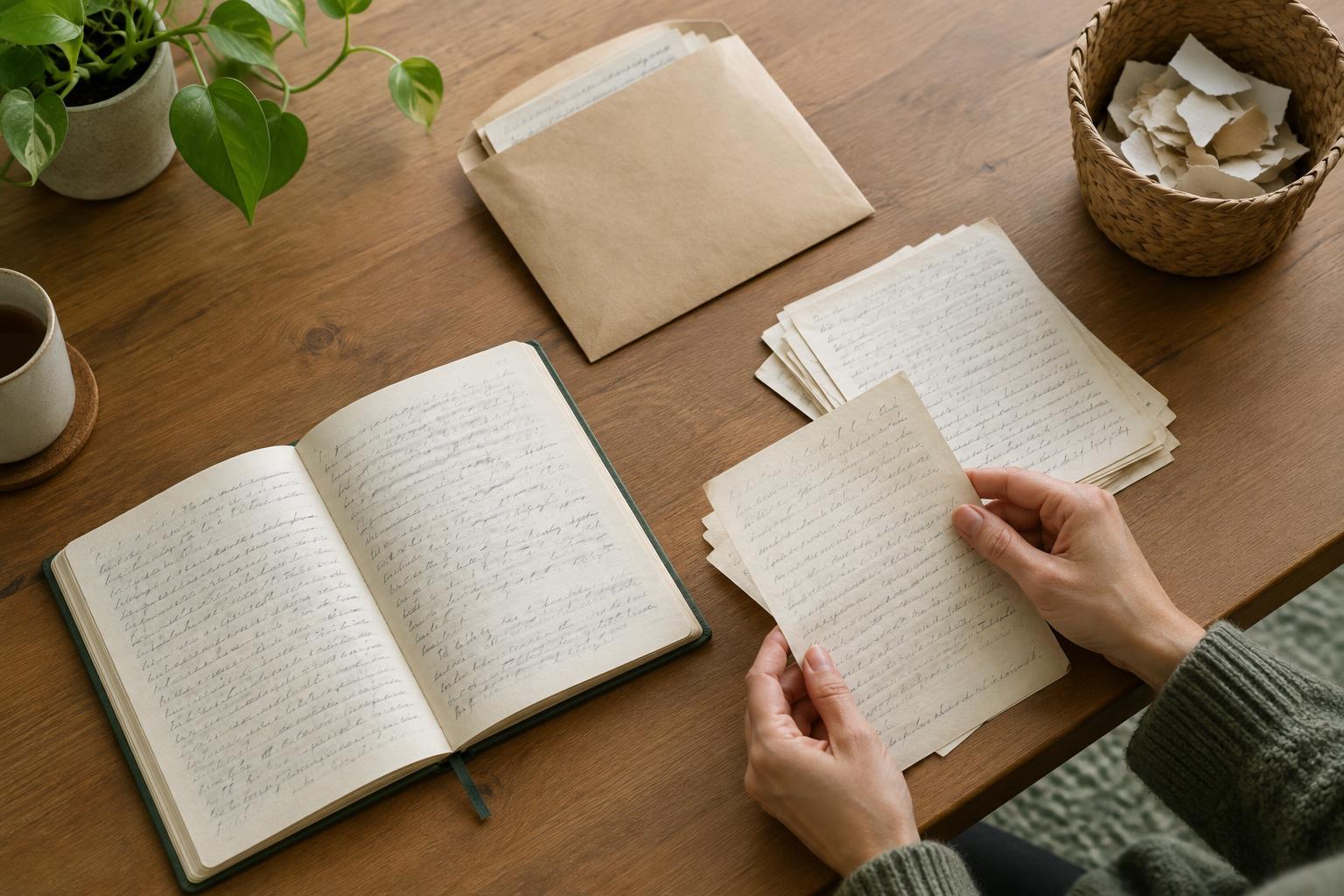
Reflective WritingNot every journal entry needs the same future. A simple review process can help you keep writing that still serves you, archive what you are unsure about, and discard pages you no longer want to hold onto.
Read article · 4 min↗

Reflective WritingA journal can help you sort through thoughts without preparing them for an audience. If privacy worries make you hold back, start by deciding what protection you need, choosing a format you can manage, and giving yourself permission to write imperfectly.
Read article · 4 min↗

Reflective WritingReflective writing can help you notice patterns without turning every page into a verdict. Learn how to avoid two common traps—forcing a lesson and judging what you write—and try a gentler way to return to the page.
Read article · 4 min↗
Reflective WritingReflective writing does not have to happen every day to be useful. Compare daily and occasional approaches, then choose a rhythm that fits your time, energy and reasons for writing.
Read article · 4 min↗

Reflective WritingFreewriting gives your thoughts room to wander; guided prompts give them a starting point. Learn when each approach is useful, how to choose based on your goal, and how to keep a reflective writing habit manageable.
Read article · 4 min↗

Reflective WritingA journal can help you notice what happened, but you do not have to turn every entry into a major plan. Learn a simple way to choose one observation, find what is within your control, and try a small next step.
Read article · 4 min↗

Reflective WritingOld journal entries can reveal repeated concerns, strengths and choices that are hard to notice day to day. Here is a simple way to reread them, identify useful themes and turn what you find into a small next step.
Read article · 4 min↗

Reflective WritingA small success can be easy to explain away. This reflective writing practice helps you describe what happened, notice your contribution, and keep the result in perspective without making it bigger or smaller than it was.
Read article · 4 min↗

Reflective WritingA brief writing practice can help you learn from a conversation without replaying every word. Use these prompts to separate what happened from what you assumed, notice what went well and choose one useful next step.
Read article · 3 min↗

Reflective WritingA few minutes of writing can help you enter a difficult or important conversation with a clearer purpose. Use this practical approach to separate facts from assumptions, choose what matters, and prepare words that sound like you.
Read article · 4 min↗

Reflective WritingA decision journal can help you remember what mattered when you made a choice, without turning every choice into a lengthy analysis. Use a few focused prompts to capture your options, your reasons and the conditions that might make you reconsider.
Read article · 4 min↗

Reflective WritingReflective writing does not have to turn a difficult day into a lesson or a plan. A few simple prompts can help you describe what happened, notice what matters, and leave the rest for another time.
Read article · 4 min↗

Reflective WritingReflective writing does not have to turn every day into a success story. These simple prompts help you notice useful moments, small choices and quiet progress while leaving room for what was difficult.
Read article · 4 min↗

Reflective WritingA quiet day can still give you something worth writing about. Learn how to notice a small moment, choose one without overthinking, and turn it into a short, useful reflection.
Read article · 3 min↗

Reflective WritingReflective writing does not require a remarkable event or a polished journal entry. A few prompts can help you describe what happened, notice your response, consider another perspective and choose a useful next step.
Read article · 3 min↗

Reflective WritingReflective writing does not require a perfect journal. Compare the practical strengths of paper and digital documents, consider privacy and convenience, and try a simple test to find a format you will use.
Read article · 3 min↗

Reflective WritingReflective writing does not need a special notebook, a long session, or a polished story. A simple five-minute routine can help you notice what happened, name what mattered, and choose a useful next step.
Read article · 4 min↗

Reflective WritingA diary records what happened. Reflective writing takes a closer look at one experience and asks what it might teach you. Learn how the two approaches overlap, when each is useful, and how to try reflection without turning it into another demanding routine.
Read article · 4 min↗