Separate the privacy problem from the writing problem
It is hard to write freely when you picture someone reading over your shoulder. You might soften an opinion, leave out a name, or explain yourself as if you were making a case to an imagined audience. That does not mean you are doing journaling wrong. It means your concern about privacy deserves attention before you ask yourself to be more candid.
Start with a plain question: what am I worried will happen? Perhaps you share a room, someone has borrowed your notebook before, or a device is used by other people. Perhaps nobody has tried to read your writing, but the possibility still makes you hesitate. These situations call for different responses. A practical risk may need a practical change; a vague worry may ease when you make a clear plan for where your journal will live and who can access it.
Choose a level of privacy you can realistically maintain
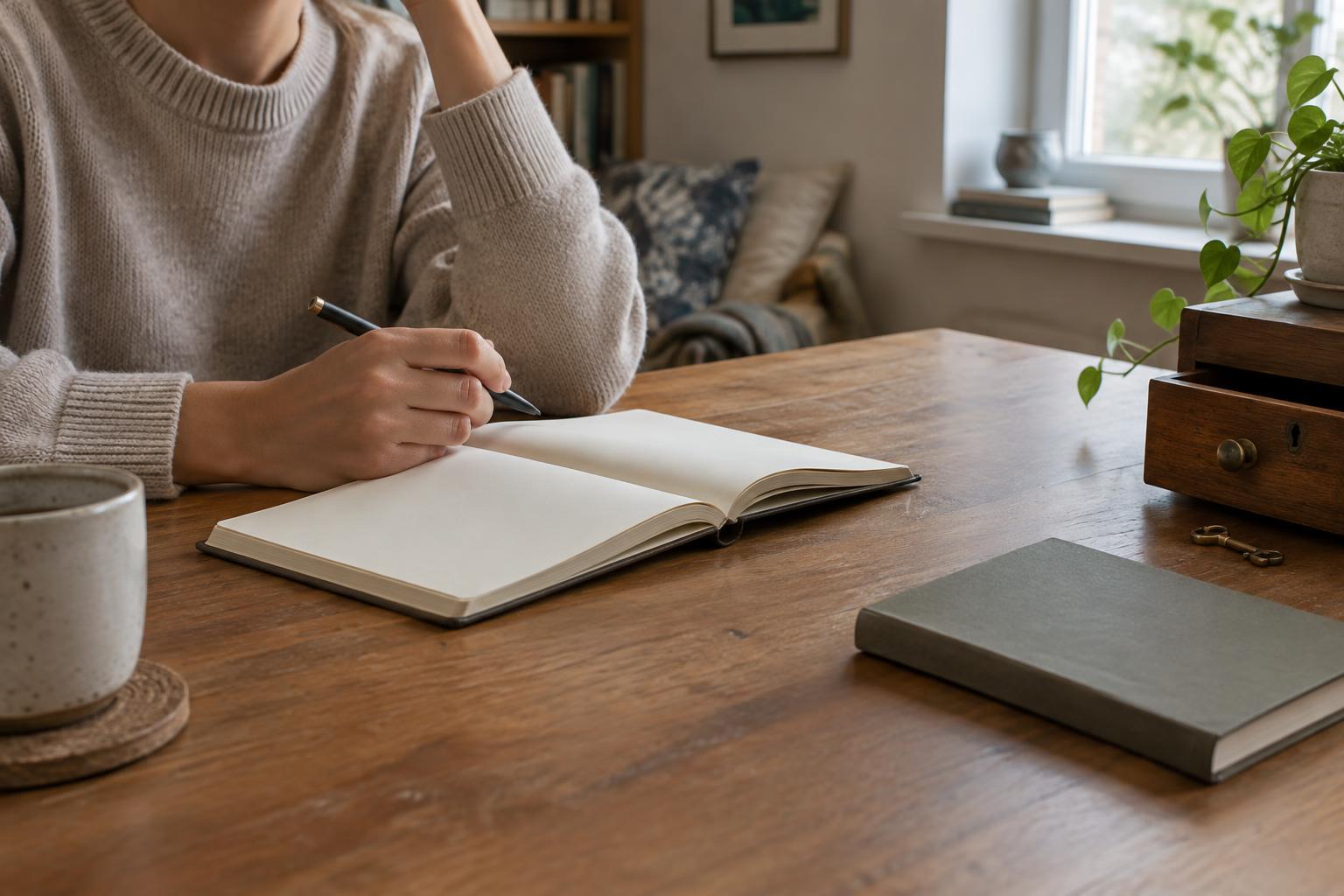
For a paper journal, consider where you will write and store it. A notebook left open on a shared table offers less privacy than one kept among your personal belongings. For digital writing, think about who uses the device, whether notifications or previews reveal text, and whether your notes sync to accounts others can access. A password or lock can help, but no storage method promises perfect privacy. Pick an arrangement you understand and can use consistently.
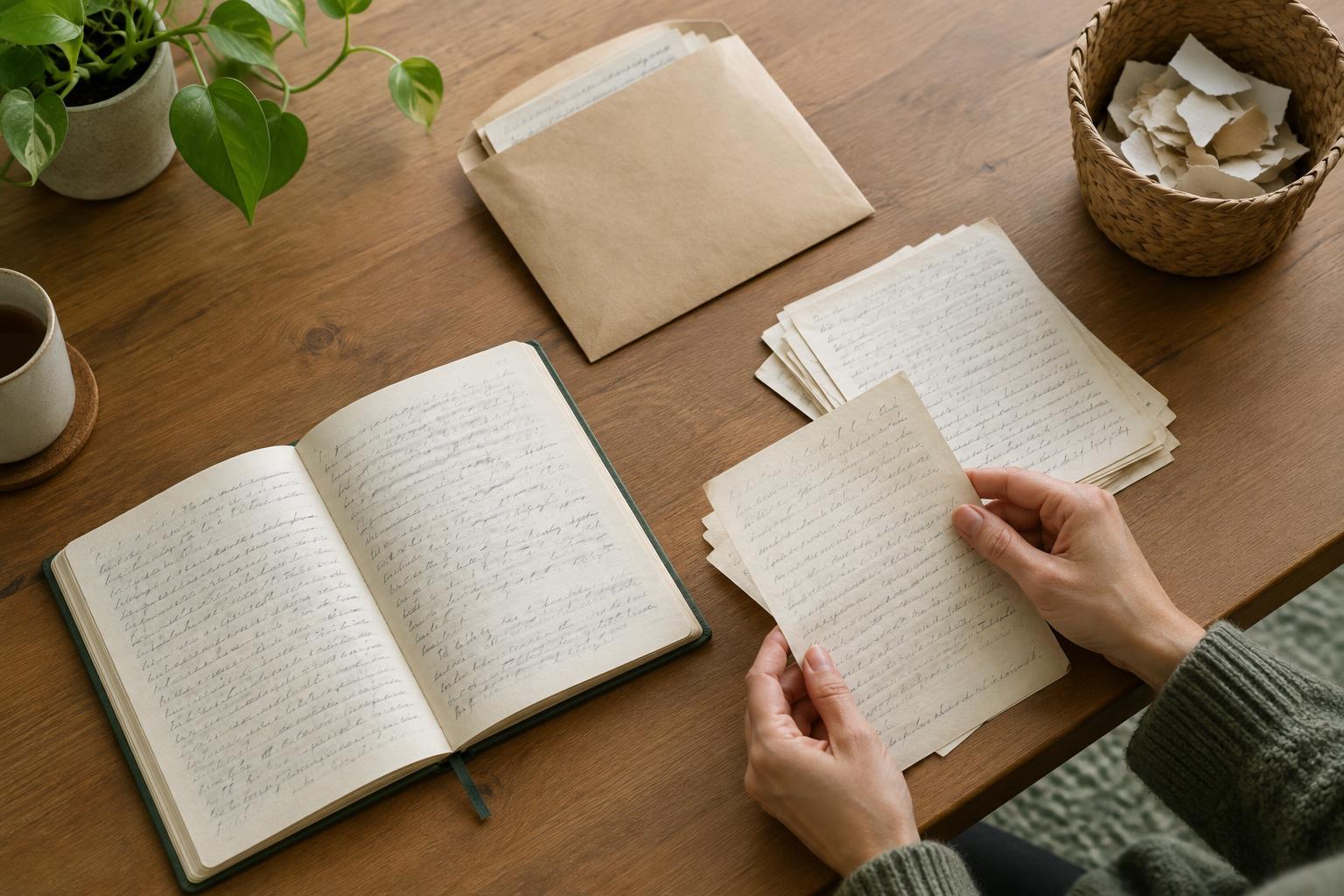
You can also decide how long to keep what you write. Some people value looking back; others prefer short-lived notes for thoughts they only need to get onto the page. If you choose to discard a page, do it deliberately rather than treating destruction as a rule for every uncomfortable thought. The aim is to make a workable choice, not to build an elaborate system that creates another reason to avoid writing.
Let honesty be specific without making every detail permanent
Honest writing does not require a complete record of every person, place, and conversation. You can write, “I felt dismissed when my idea was passed over,” without documenting a coworker’s full name or reconstructing the entire meeting. You can describe what you remember, how you reacted, and what you need to consider next. That is often enough to make the entry useful to you.
If identifying details feel risky, use initials or broad descriptions, while remembering that a determined reader might still understand the context. Avoid turning this into a puzzle you have to decode later. The more important distinction is between leaving out a detail to respect privacy and changing your own feelings to sound agreeable. You are allowed to write, “I was angry,” even if you are not yet sure whether that anger was fair or what you want to do about it.
Write a rough first version instead of a defensible one
A journal entry is not a statement you have to stand by forever. If you notice yourself writing for a potential reader, try beginning with a sentence such as, “What I am reluctant to admit is…” or “If this were only for me, I would say….” Then write for a few minutes without stopping to balance every point. You can come back later and add context, but you do not have to edit your first reaction into politeness before you understand it.
It may help to separate observation from interpretation. Write what happened as you remember it, then what you felt, then what you think it might mean. For example, “They changed the subject. I felt embarrassed. I am telling myself they were bored, but I do not know that.” This approach makes room for honest emotion without asking you to treat every assumption as fact.
Decide what stays private and what you might share
Writing something down does not obligate you to show it to anyone. If an entry helps you prepare for a conversation, you can choose one sentence to share and keep the rest for yourself. “I felt left out when the plan changed” may be enough; the other person does not need to inspect the pages where you worked out why it bothered you. Your journal can be a place to rehearse clear communication, not evidence you must hand over.
If someone expects access to your journal, it is reasonable to state a simple boundary: “I keep my writing private.” You do not need to justify every page. And if your living situation makes private writing difficult, a short entry in a more secure format may serve you better than a detailed one you feel unsafe keeping. The goal is not fearless disclosure. It is a writing practice where you can tell yourself the truth with an amount of privacy you can actually support.