Start with the reason you want to write
Reflective writing does not need to produce a polished page or a striking insight. It can be a place to notice what happened, sort through competing thoughts, or prepare for a conversation. The best starting method depends less on whether you are a “good writer” and more on what you want from the session.
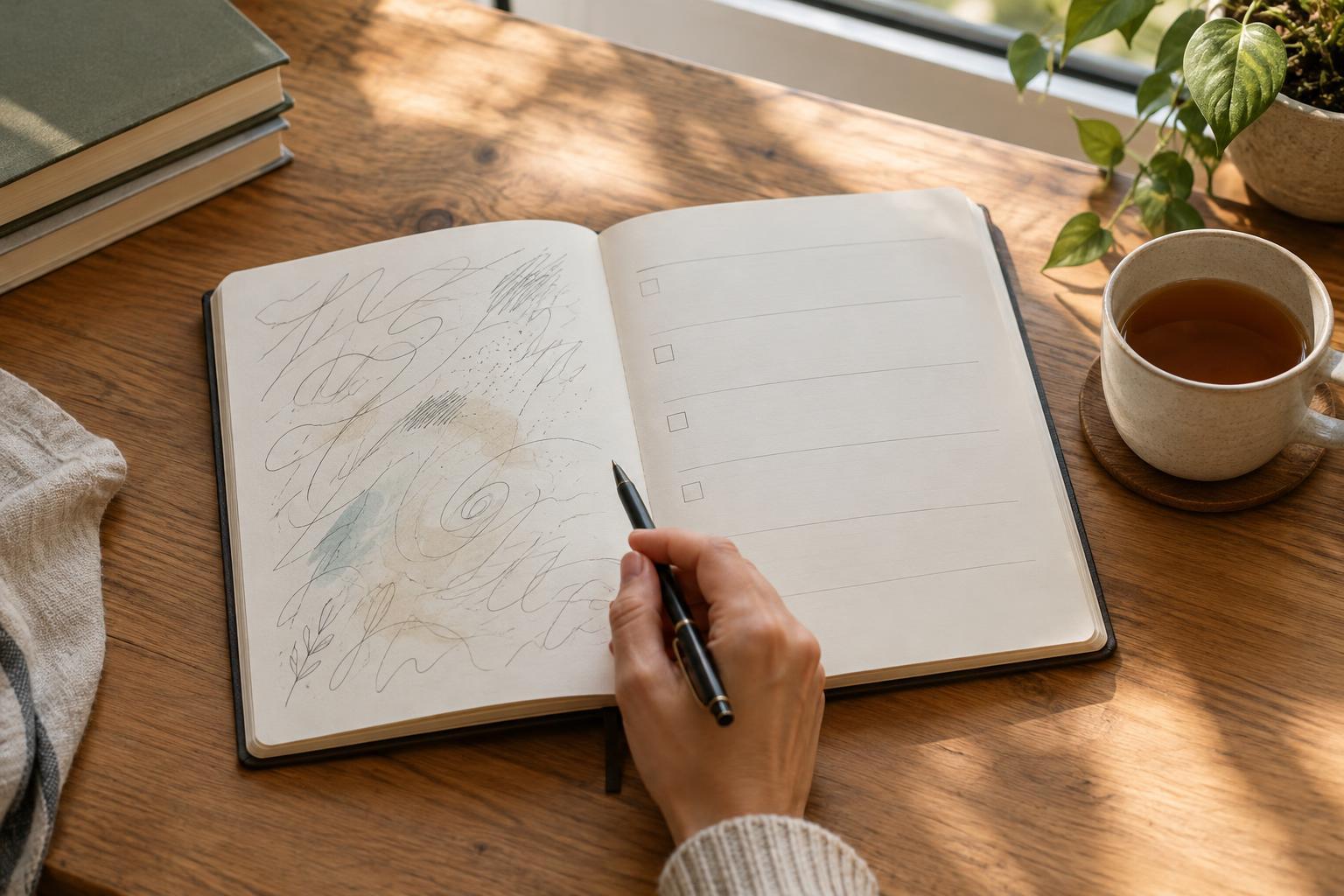
Freewriting means putting words down without following a set question. You might begin with “What is on my mind?” and continue without stopping to edit. Guided writing begins with a specific prompt, such as “What part of that meeting felt difficult, and what would I like to do differently?” Neither method is inherently deeper. One offers room to explore; the other offers a direction to follow.
Choose freewriting when you need room to discover the topic
Freewriting can help when you know something is taking up attention but cannot yet name it. Set a short timer, write whatever comes to mind, and let the subject change if it needs to. A page that starts with a frustrating commute might eventually reveal that you are worried about an upcoming presentation. You do not have to force that connection; the point is to make space to notice it.
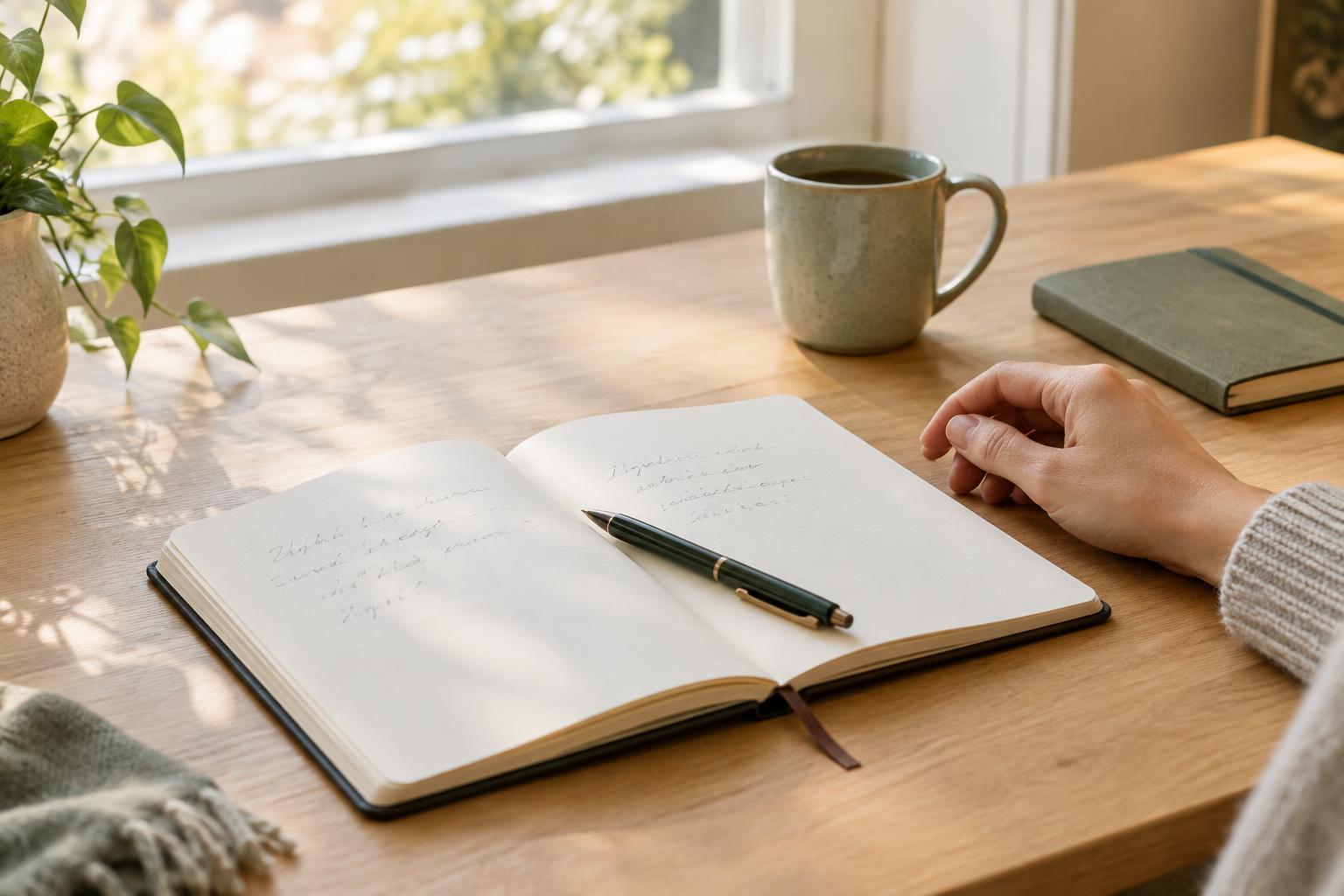
This approach may also suit you if prompts make writing feel like an assignment. There is no question to answer correctly. Repetitions, unfinished sentences and ordinary details are all allowed. If you get stuck, write “I’m not sure what to say” and keep going, or describe what happened today in simple terms.
The trade-off is that an open page can feel too open. You may circle the same thought without learning what you want to do next. If that happens, finish with one grounding question: “What, if anything, needs my attention after I close this notebook?” An answer of “nothing right now” is useful too.
Choose prompts when you have a specific question
Guided prompts are useful when you want to reflect on an identifiable event, decision or habit. A focused question reduces the work of getting started. After a conversation, for example, you could ask: “What did I communicate clearly?” and “What would I like to clarify next time?” Those questions direct attention toward details you can use, rather than asking you to judge your entire performance.
Prompts can also help you compare experiences over time. If you regularly write about work boundaries, returning to “What did I agree to today, and did I have enough time for it?” may make your choices easier to notice. Keep the wording neutral. “Why do I always handle this badly?” invites a verdict; “What made this difficult today?” leaves room for context and options.
A prompt is a starting point, not a rule. If your answer takes you somewhere more relevant, follow it. If a question feels too personal or unhelpful, replace it. Useful structure should support your attention, not make the session feel like a test.
Try a small experiment instead of choosing forever
If both methods sound appealing, try each for a few short sessions. On one day, freewrite for five to ten minutes. On another, answer one prompt for about the same amount of time. Afterwards, note whether you could begin easily, whether you noticed anything useful, and whether you would want to write that way again. You are evaluating the practice, not grading what you wrote.
You can also combine the methods. Start with a prompt such as “What has been taking more energy than I expected?” Then freewrite without trying to stay neatly on topic. Or begin with an open page and end by answering “What is one small next step?” This gives wandering thoughts some room while providing a gentle way to close.
Your choice may vary by day. A prompt might help when you have ten minutes before a meeting; freewriting might feel better when you are unsure what is bothering you. A workable routine is one you can adjust, rather than one you must follow perfectly.
Keep the practice useful and contained
Before you begin, decide how long you want to write and where the pages will go. Privacy matters: use a notebook or file you are comfortable storing, and avoid recording someone else’s sensitive details unnecessarily. You do not have to reread every entry. Some writing is useful simply because it lets you put a thought into words.
When you do review an entry, look for a modest takeaway rather than a sweeping conclusion. You might identify a question to ask, a boundary to state, or something you want to leave unresolved for now. If writing about a subject repeatedly leaves you feeling more overwhelmed, it is fine to pause, switch to a simpler observation prompt, or seek support from someone you trust. Reflective writing is a flexible tool, not an obligation to work through everything on your own.