Know the route, not the script
Memorizing a speech word for word can feel reassuring, but it gives you a lot to keep track of. If you forget one sentence, you may spend the next few moments trying to retrieve it instead of speaking to the people in front of you. A more flexible approach is to learn the route through your ideas: where you begin, which points matter most and how you will finish.
Start by writing the purpose of your speech in one sentence. What should listeners understand, consider or do when you finish? Then choose a small number of main points that support that purpose. Put them in an order that makes sense to someone hearing them for the first time. For each point, note one example, explanation or story that will help make it clear. This outline is the structure you will rehearse; the exact wording can change.
Practise speaking, not just reading
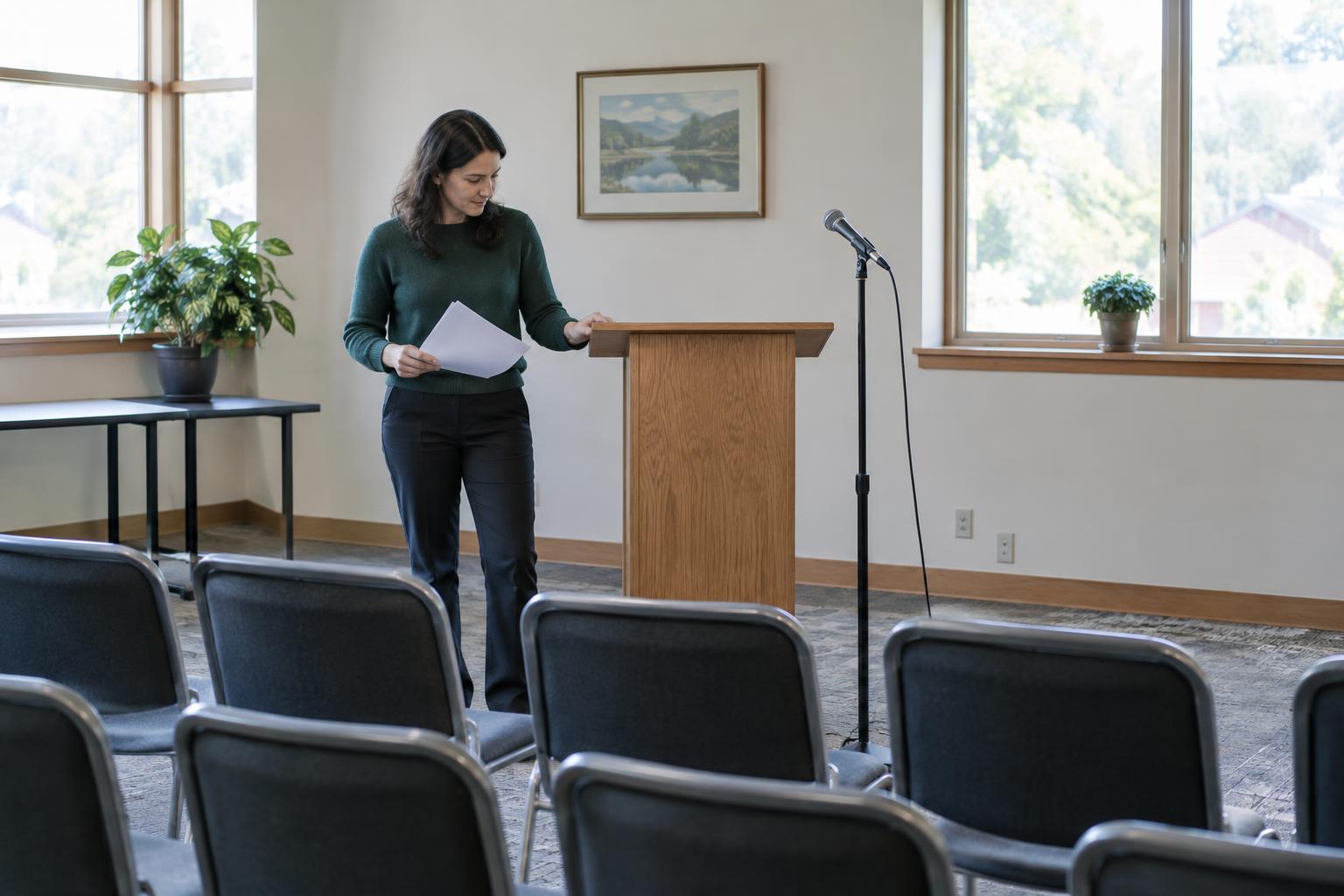
Reading a draft silently can help you edit it, but it cannot show you how the speech feels to say aloud. Once you have an outline, stand or sit as you expect to during the talk and speak through it. Use ordinary words, even if they differ from what you wrote. You may notice that a sentence looks elegant on the page but is awkward to say. Shorten it, split it in two or replace it with language you would use in conversation.
On the first few runs, focus on getting from one point to the next. Do not stop and restart every time you phrase something imperfectly. Instead, finish the thought and continue. Afterward, make a brief note of places where you hesitated. Was the idea unclear, was the transition missing or did you need a better example? Adjust the outline, then try again. Rehearsal is a way to improve the speech, not a test you must pass on the first attempt.
Give extra attention to the opening and transitions
You do not have to treat every sentence equally. It can help to practise your opening until you know how you want to begin. A familiar first line gives you a starting point, while a clear final sentence helps you end without trailing into an unplanned summary. You can prepare these more closely without committing the entire speech to memory.
The bridges between ideas deserve practice too. If your points are clear but the move between them feels abrupt, write a simple cue such as, “That explains the problem; now let’s look at an option.” Say the transition aloud in a few different ways. You are learning its job, not locking yourself into one version. When you know why the next point follows, you are less dependent on recalling a particular sentence.
Make notes you can actually use
Good speaking notes should help you find your place at a glance. A full page of dense text may tempt you to read, while notes that are too sparse may leave out a detail you need. Try one short heading per main point, followed by a few keywords: the example, an important distinction and the transition to the next section. Keep any wording you need to say precisely, such as a name or a definition, easy to spot.
Rehearse with the same type of notes you plan to use on the day. Practise looking down, locating a cue and looking back up before you continue. If you need to search for your next point, change the layout rather than hoping you will remember it later. Numbered points, generous spacing and visible section headings can make the route easier to follow.
Prepare to continue when the wording changes
In a real speech, you might skip an example, change a sentence or lose your place briefly. None of those moments requires you to start over. During one rehearsal, deliberately pause in the middle of a point. Take a breath, look at your notes and resume with the main idea. You can also practise a plain reset phrase, such as, “The key point is this.” It gives you a way back without drawing attention to a missing line.
As the talk approaches, run through it from beginning to end a few times, allowing the wording to vary. Check whether your main points remain clear and whether the length suits the time available. A useful rehearsal leaves you familiar with your message, your notes and the next step after a pause. That familiarity gives you room to speak naturally, rather than trying to reproduce a page from memory.